
Wavelength science
Why three wavelengths outperform one
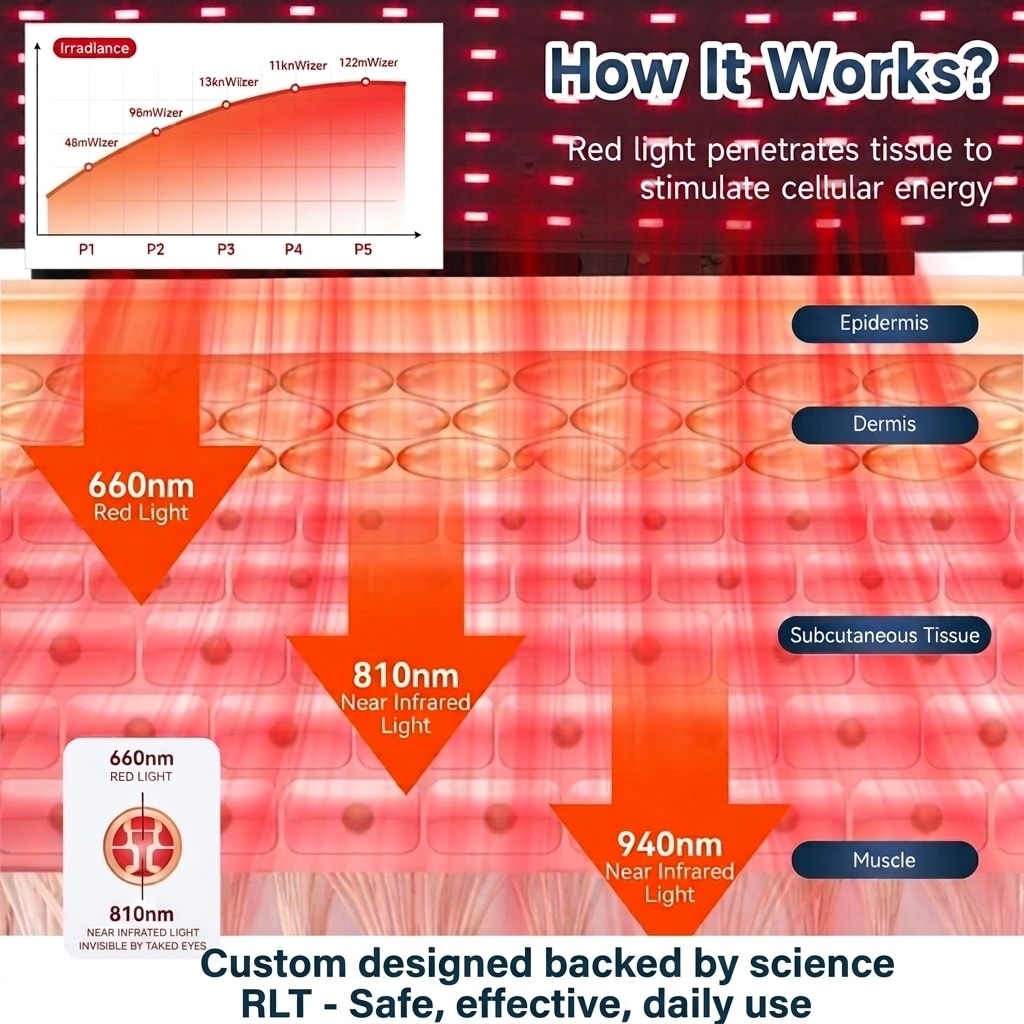
660nm · 810nm · 940nm — each wavelength targets a different tissue depth. Together they create a tri-spectrum effect that no single-wavelength device can replicate.
Penetration depth at a glance
Each wavelength reaches a different tissue layer. The tri-spectrum combination covers the full musculoskeletal stack in a single session.
Skin, superficial fascia, wound healing
Muscle, tendon, ligament, peripheral nerve
Deep muscle, joint capsule, bone, spinal structures
Not all red light is equal
The photobiomodulation (PBM) research is clear: wavelength determines depth of penetration, and depth determines which tissues you can actually treat. A pad that emits only 660nm reaches the skin and superficial fascia. A pad that adds 810nm and 940nm reaches deep into muscle, tendon, bone, and joint — the structures that matter most for musculoskeletal health.
660nm — visible red light
At 660nm the photons are absorbed strongly by cytochrome c oxidase in the mitochondria of skin cells and superficial connective tissue. This drives ATP production, reduces local inflammation, accelerates wound healing, and stimulates collagen synthesis. It is the wavelength most studied for dermal repair, scar reduction, and surface-level pain relief.
- Stimulates mitochondrial ATP production in skin cells
- Reduces prostaglandin-driven surface inflammation
- Accelerates collagen synthesis and wound closure
- Improves microcirculation in superficial tissue
Penetration depth
1–3 mm
Primary targets
Skin, superficial fascia, wound healing
Spectrum type
Visible red810nm — near-infrared, the workhorse wavelength
810nm sits at the peak absorption window of cytochrome c oxidase and penetrates 3–5 cm into tissue — deep enough to reach muscle bellies, tendons, ligaments, and peripheral nerves. The majority of PBM clinical trials for musculoskeletal pain, tendinopathy, and nerve regeneration use 810nm as the primary or sole wavelength. It is the most evidence-backed wavelength for the conditions physiotherapists treat every day.
- Penetrates to muscle, tendon, and ligament depth
- Reduces delayed-onset muscle soreness (DOMS)
- Accelerates tendon and ligament repair
- Supports peripheral nerve regeneration
- Modulates inflammatory cytokines (TNF-α, IL-6)
Penetration depth
3–5 cm
Primary targets
Muscle, tendon, ligament, peripheral nerve
Spectrum type
Near-infrared940nm — deep infrared for joint and bone
940nm photons carry enough energy to penetrate 5–10 cm — reaching joint capsules, subchondral bone, intervertebral discs, and the deep paraspinal muscles that conventional physiotherapy struggles to access. At this depth, 940nm activates heat-shock proteins, reduces synovial inflammation, and supports bone remodelling. For horses, 940nm is critical: it must overcome a dense coat and thick subcutaneous fat layer before it can reach the musculoskeletal structures underneath.
- Reaches joint capsule, subchondral bone, and disc
- Activates heat-shock proteins for tissue repair
- Reduces synovial inflammation in arthritic joints
- Supports bone remodelling and stress fracture recovery
- Penetrates equine coat and subcutaneous fat
Penetration depth
5–10 cm
Primary targets
Deep muscle, joint capsule, bone, spinal structures
Spectrum type
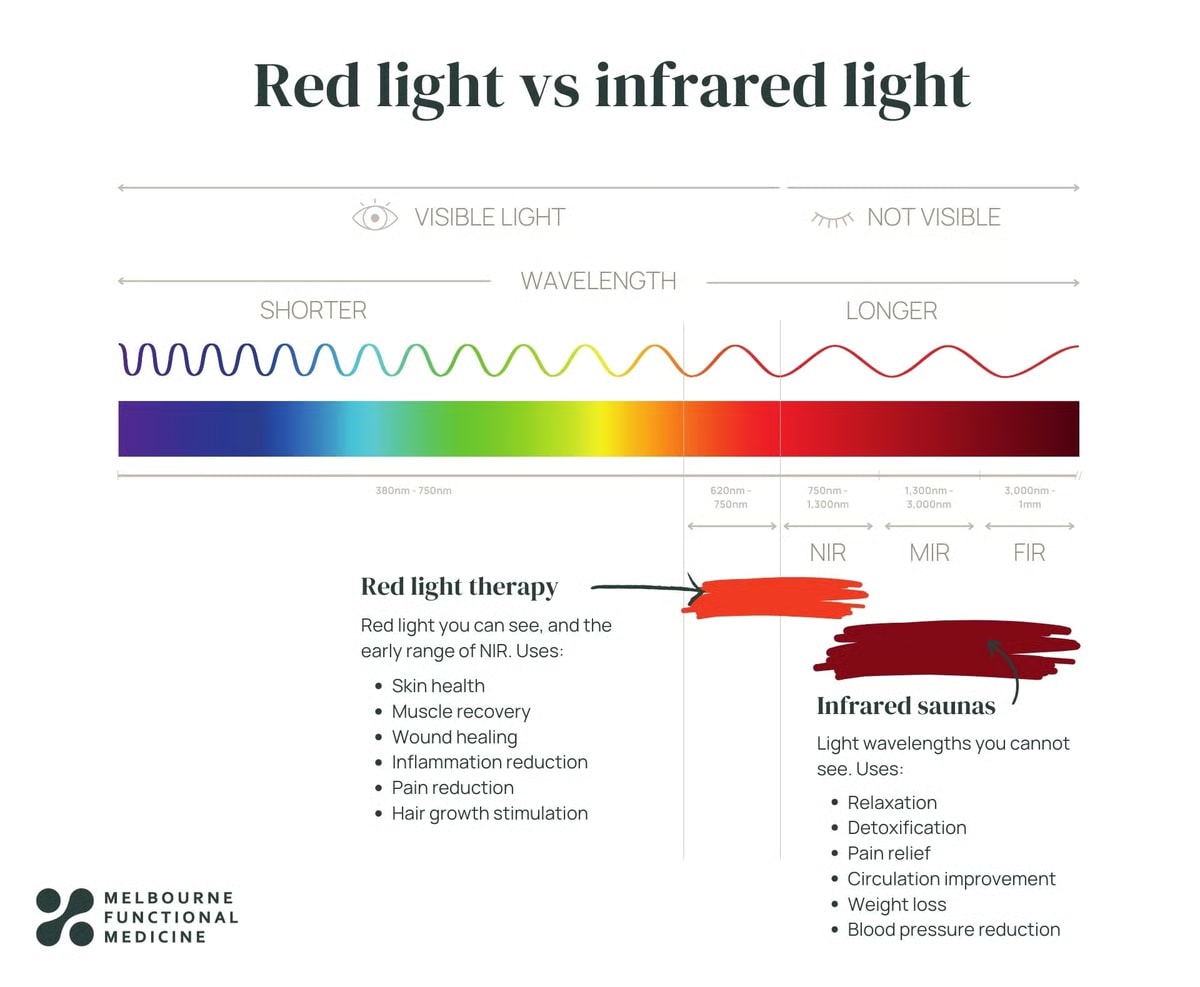
Deep infraredRed vs infrared — understanding the spectrum
Visible red (600–700nm) and near-infrared (700–1100nm) occupy adjacent bands of the electromagnetic spectrum but behave very differently in tissue.
Single-spectrum vs tri-spectrum
Most consumer red light devices emit only 660nm — the cheapest LED to manufacture. Some add 850nm. Our pads combine 660nm, 810nm, and 940nm because musculoskeletal conditions rarely live at a single depth. A hamstring tear involves skin, fascia, muscle belly, and tendon insertion simultaneously. Treating all three depths in one session is not a marketing claim — it is basic anatomy.
| Feature | Single 660nm | Tri-spectrum |
|---|---|---|
| Skin & superficial fascia | ✓ | ✓ |
| Muscle belly (3–5 cm) | ✗ | ✓ |
| Tendon & ligament | ✗ | ✓ |
| Joint capsule & bone | ✗ | ✓ |
| Equine coat penetration | ✗ | ✓ |
| Single-session full-depth treatment | ✗ | ✓ |
The cellular mechanism
All three wavelengths share the same primary target: cytochrome c oxidase (CCO), the terminal enzyme of the mitochondrial electron transport chain. When photons are absorbed by CCO, they dissociate inhibitory nitric oxide, restore electron flow, and drive a surge in ATP production. This energy cascade triggers downstream effects — reduced oxidative stress, upregulation of anti-inflammatory pathways, and activation of transcription factors that govern tissue repair.
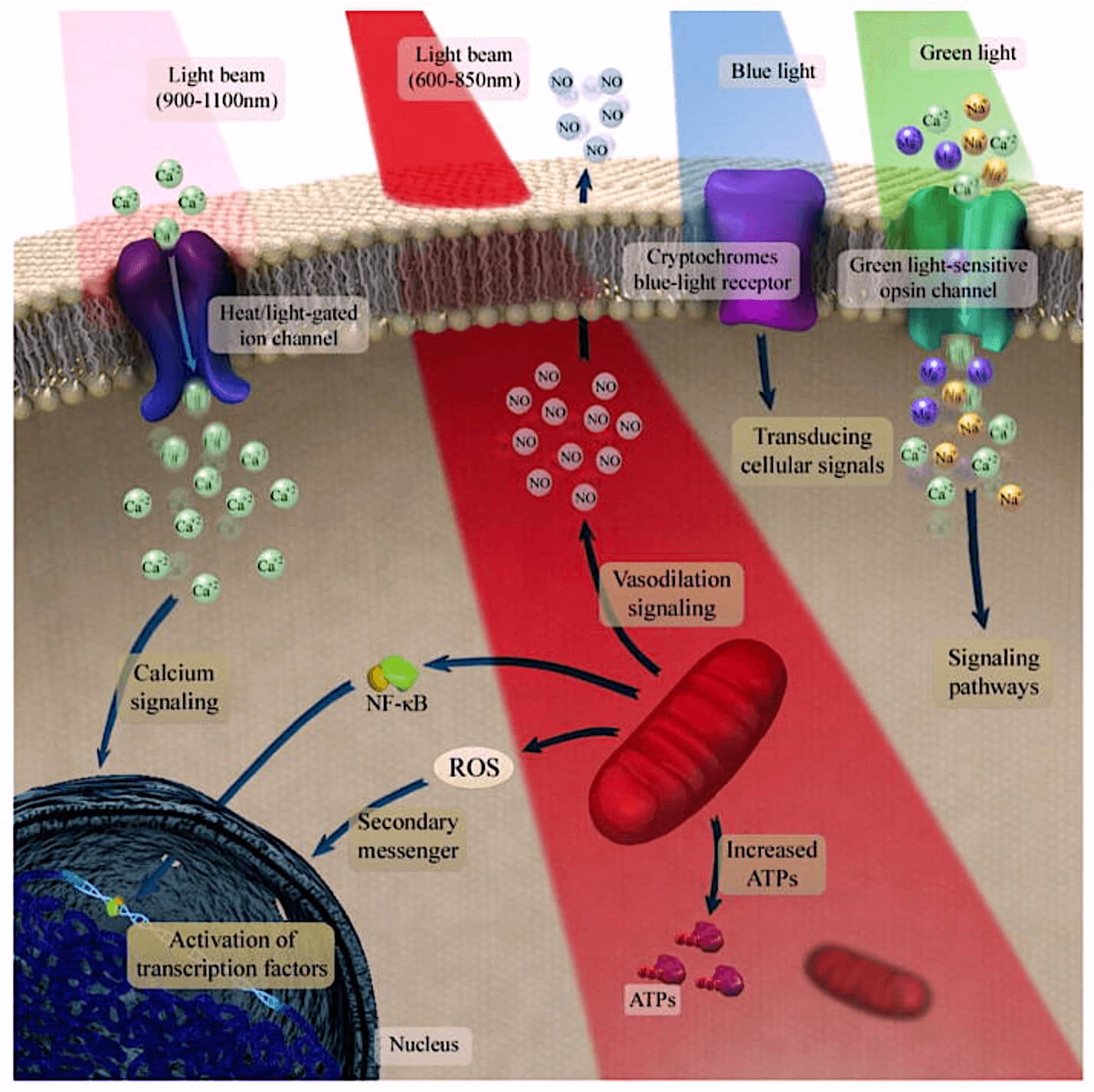
Downstream effects: transcription factors and gene expression
The ATP surge from CCO activation triggers a cascade of transcription factor activity — including NF-κB, AP-1, and Nrf2. These regulate hundreds of genes involved in inflammation resolution, antioxidant defence, and tissue remodelling. This is why PBM effects persist long after the treatment session ends: you are not just delivering heat or temporary pain relief, you are changing gene expression in the treated tissue.
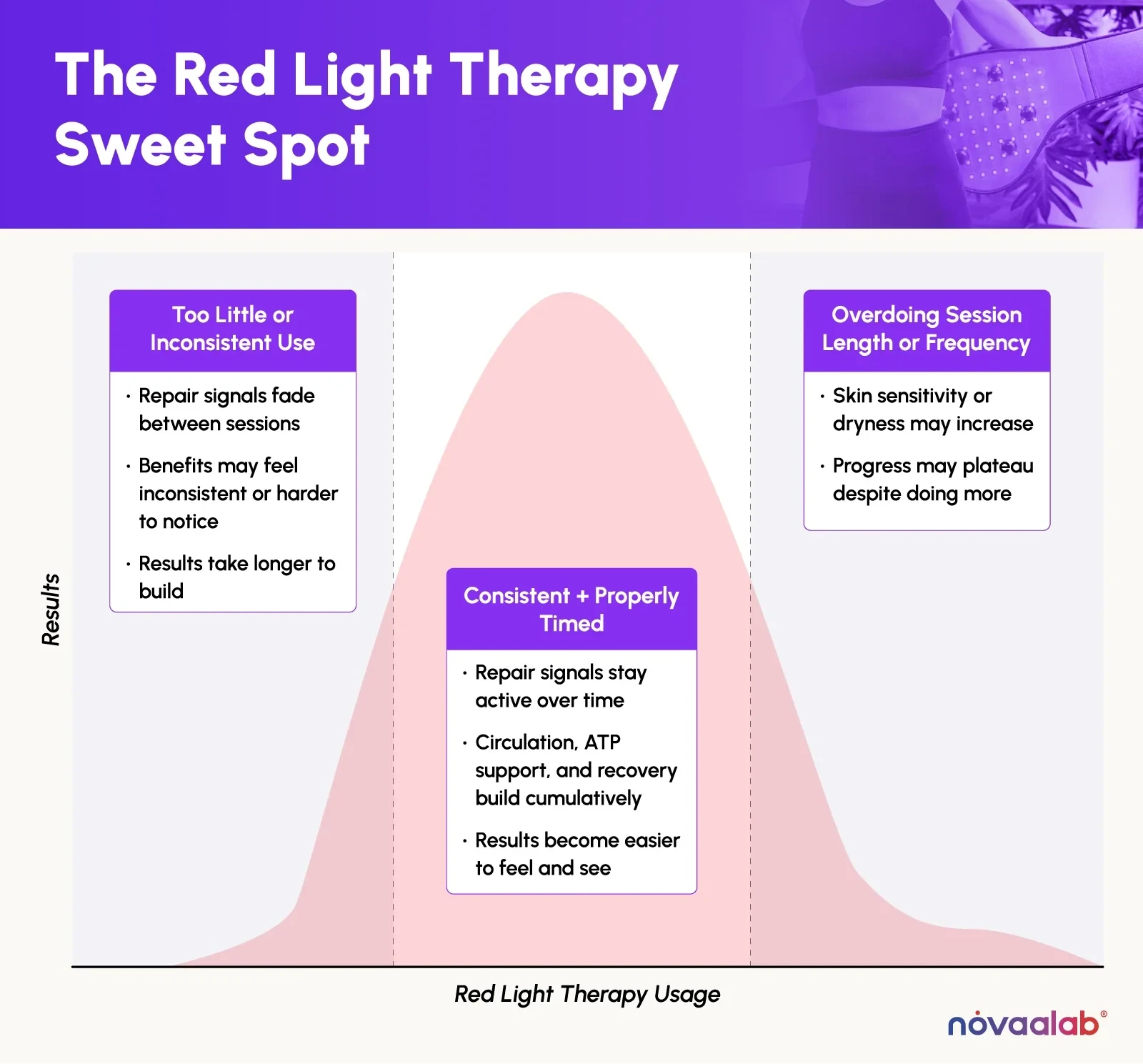
Dosing: the Arndt-Schulz sweet spot
PBM follows a biphasic dose-response (Arndt-Schulz law): too little light produces no effect; the right dose produces the therapeutic effect; too much light inhibits it. The optimal fluence for musculoskeletal tissue sits between 4–10 J/cm². Our pads are calibrated to deliver this range at the recommended treatment distances and durations — so you get the benefit without the inhibitory overdose that plagues high-powered devices used incorrectly.
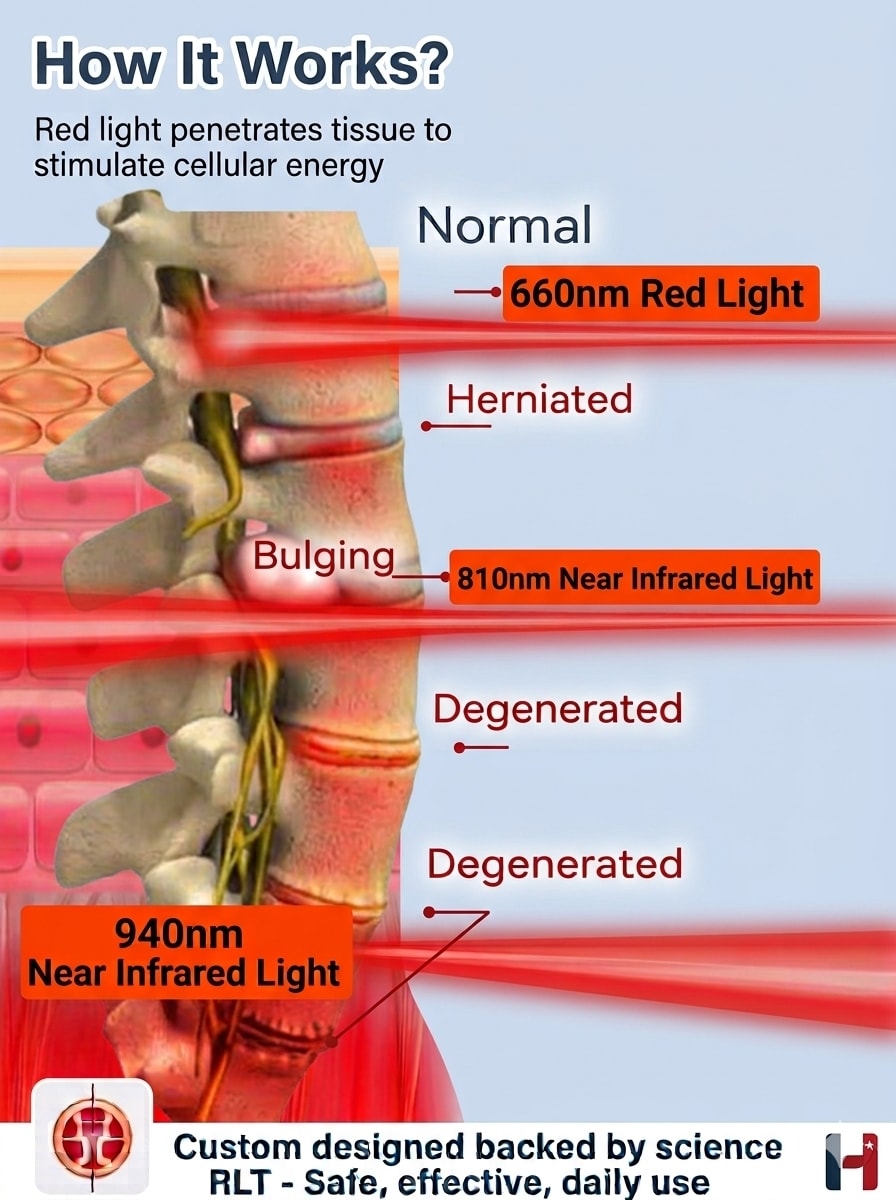
Spinal application — why depth matters
The paraspinal muscles, facet joints, and intervertebral discs sit 4–8 cm below the skin surface. Only 810nm and 940nm reach these structures — making tri-spectrum essential for any spinal condition.
Designed around the science
Every pad in the Red Light Physiotherapy range is built on this tri-spectrum principle — because Annie designed them as a physiotherapist who needed a clinical tool, not a wellness gadget.