
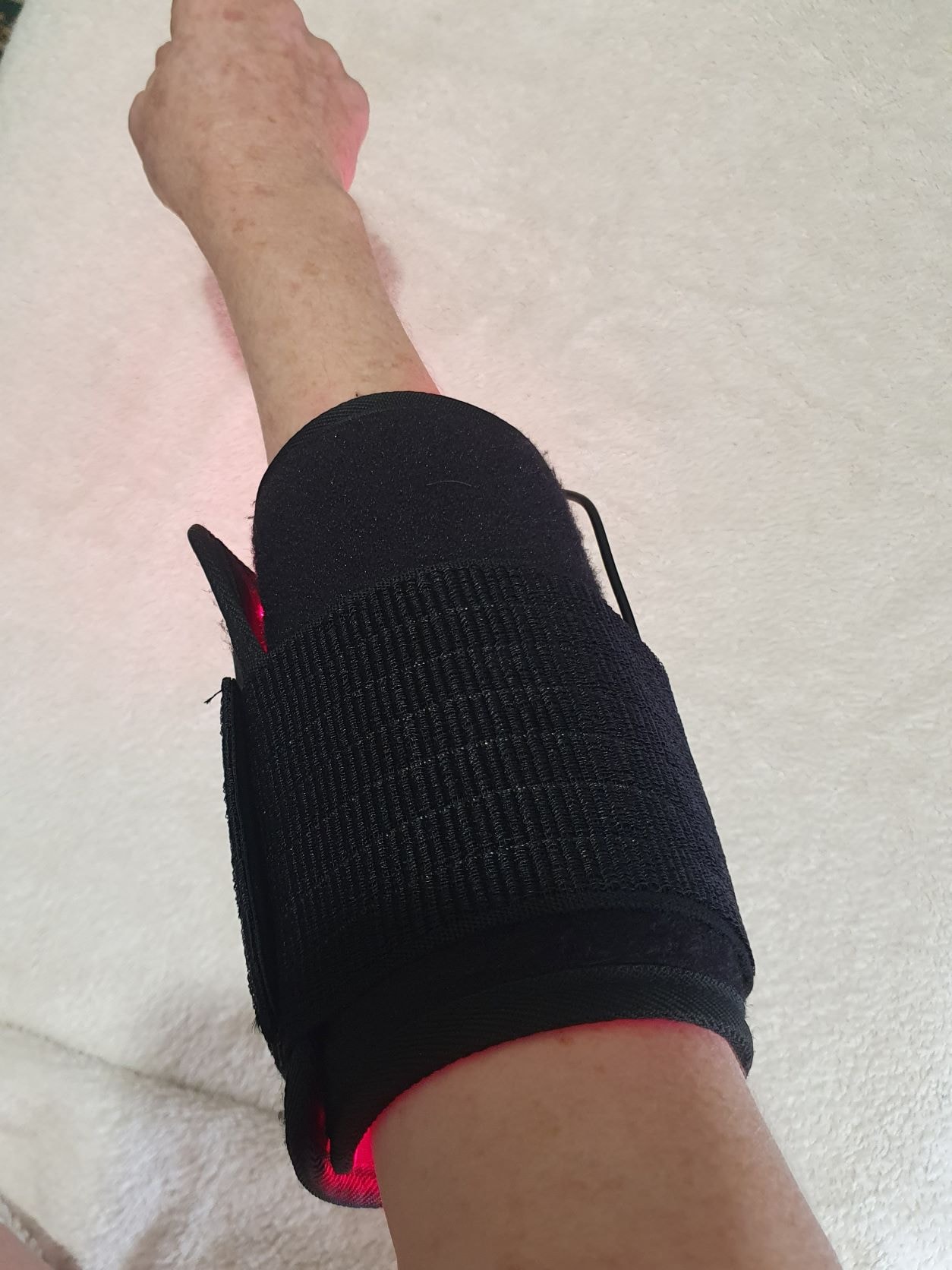
When dealing with a persistent musculoskeletal injury—whether it is a stubborn lower back strain in an active human or an acute tendon injury in a performance animal—the biological objectives remain identical: mitigate pain, clear localised inflammation, and accelerate structural cellular repair.
Traditionally, managing these symptoms has relied on chemical interventions or prolonged periods of rest. However, Photobiomodulation (PBM) Therapy—commonly known as Red and Near-Infrared (NIR) Light Therapy—offers a sophisticated, non-invasive alternative. By applying specific wavelengths of light to damaged or fatigued tissue, PBM interacts directly with the body's nervous and vascular networks.
As a practicing physiotherapist and rider biomechanics coach, I utilise this science to target identical cellular pathways across both human and animal physiology, helping patients return to peak movement patterns faster.
🛑The Neurology of Pain Relief: Silencing the Nerve Signals
To understand how light therapy influences pain, we have to look at the nervous system. Pain is not just a localised feeling; it is an electrical signal sent from peripheral nociceptors (pain receptors) up the spinal cord to the brain. PBM therapy helps disrupt this pain pathway through three distinct neural mechanisms:
Slowing Down Nerve Conduction
Exposure to high-irradiance near-infrared light temporarily slows down the conduction velocity of peripheral nerve fibres. By calming these hyper-excitable nerves, the frequency and intensity of the pain signals reaching the brain are heavily reduced.
Blocking Mitochondrial Axonal Transport
Research demonstrates that near-infrared light can induce a temporary, reversible block in the small fibres (C-fibres and A-delta fibres) that transmit chronic pain signals. It stops the transport of proteins down the nerve axon, effectively 'turning down the volume' on localised pain.
Stimulating Endorphin Release
PBM triggers the systemic release of endogenous opioids (endorphins and enkephalins). These are the body's natural, self-produced pain relievers, which help dull discomfort safely without the gastrointestinal side effects common with pharmaceutical painkillers.
🌊The Mechanics of Accelerated Recovery: Clearing the Traffic Jam
When tissue is injured or overexerted, the body triggers a localised inflammatory response. While initial inflammation is necessary for healing, a prolonged inflammatory state traps fluid, deprives cells of oxygen, and causes throbbing structural pain.
PBM acts as a biological "traffic clearer" for both human and animal circulatory systems:
The Recovery Flywheel
Photons hit local water & haemoglobin molecules.
Immediate release of Nitric Oxide causes rapid Vasodilation.
Swelling and lymphatic fluid are efficiently flushed away.
Oxygenated blood rushes in, delivering vital repair nutrients.
By utilising a targeted Tri-Spectrum design (660nm, 810nm, and 940nm), our therapy pads don't just sit on the skin's surface. Shorter wavelengths handle superficial vascular flow, while deeper infrared bands (specifically 810nm and 940nm) punch through dense human muscle groups, thick animal coats, and tough joint capsules to flush out deep-seated inflammation at its source.
🧬Tissue Regeneration: Repairing the Cellular Framework
True recovery requires rebuilding what was damaged. Once pain signals are managed and swelling is cleared, cells need the physical energy required to rebuild structural proteins and collagen.
For Humans: Targeting Chronic Overuse
In the human body, areas with poor natural blood supply—such as the lumbar spine discs, the plantar fascia, and deep shoulder tendons—frequently struggle to heal, turning acute strains into chronic pain. PBM floods these low-blood-flow zones with cellular energy (ATP), accelerating collagen synthesis so that torn or strained muscle and tendon fibres can realign cleanly, restoring flexible, pain-free range of motion.
For Animals: Conquering the Tissue Density Barrier
Animals possess a massive musculoskeletal framework, meaning their muscle groups, ligaments, and tendons are significantly denser than ours. Performance animals like sports horses routinely subject their hocks, cannons, and backs to extreme mechanical loads. Applying a practitioner-designed, mobile tri-spectrum wrap immediately post-exercise ensures that micro-tears in the animal's tissue are targeted with cellular energy before chronic, painful inflammation can take hold.
Conclusion: A Shared Biological Response
Whether you are treating your own lower back or supporting the rehabilitation of a performance animal, the underlying physiology of recovery is completely universal. By delivering a concentrated, precise dose of red and near-infrared light, you actively assist the body in down-regulating nerve pain, expanding local blood flow, and fast-tracking structural cellular repair.
Academic & Scientific References
- 1.Chow, R. T., et al. (2009). Efficacy of low-level laser therapy in the management of neck pain: a systematic review and meta-analysis of randomised placebo or active-treatment controlled trials. The Lancet, 374(9705), 1897–1908.
- 2.Cotler, H. B., et al. (2015). The Use of Low-Level Laser Therapy (LLLT) for Musculoskeletal Pain. MOJ Orthopedics & Rheumatology, 2(5), 00068.
- 3.Kingsley, M. A., et al. (2023). Photobiomodulation therapy in equine sports medicine: A clinical review of soft tissue injury outcomes. Veterinary and Comparative Orthopaedics and Traumatology.
Ready to Experience the Science?
Explore our range of clinically designed tri-spectrum therapy pads — built by an Australian physiotherapist for real results.